
Why Does My Urine Smell? 5 Common Causes You Shouldn’t Ignore
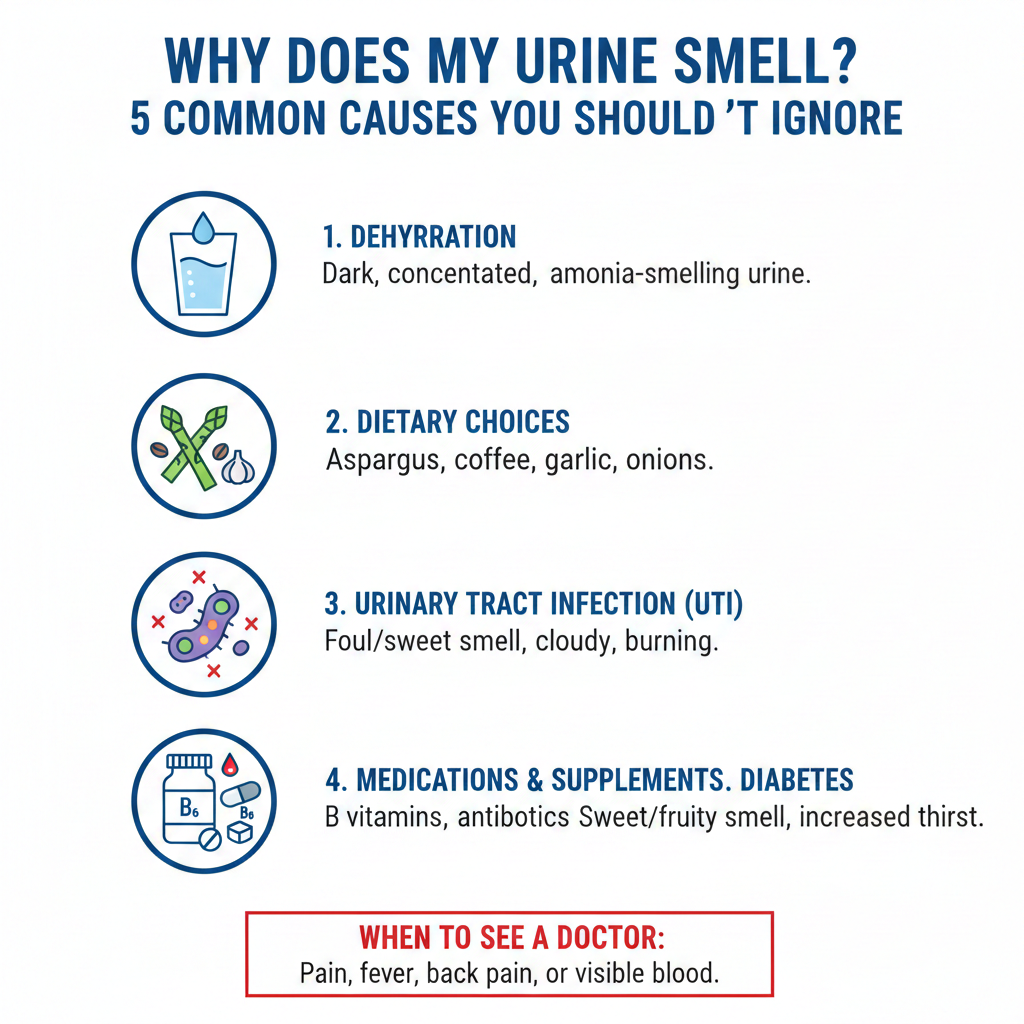
Have you ever noticed an unusual smell in your urine and wondered if something was wrong? Changes in urine odor are common—and while many causes are harmless, some may signal underlying health conditions that need attention. According to Dr. Prabhat Ranjan, Consultant Urologist, urine odor can range from mildly noticeable to strongly unpleasant depending on hydration, diet, and overall health. Let’s break down the five most common reasons your urine smells different and when you should see a doctor. 1. Ammonia-Smelling Urine: A Sign of Dehydration 💧 One of the most common causes of strong-smelling urine is dehydration. Why it happens: When you don’t drink enough water, urine becomes more concentrated with waste products, leading to a sharp ammonia-like smell. What to do: Increase your water intake Aim for pale yellow or clear urine Limit excessive caffeine and alcohol ✅ Good news: This is usually harmless and easily reversible. 2. Sweet or Fruity Smell: Possible High Blood Sugar 🍎 If your urine smells sweet or fruity, it could be a warning sign of high blood sugar levels, often associated with Diabetes. Why it happens: Excess glucose spills into the urine, altering its odor. Watch out for other symptoms: Frequent urination Increased thirst Unexplained fatigue ⚠️ Important: If this smell persists, consult a doctor for blood sugar testing. 3. Pungent or Strong Smell: Diet-Related Causes 🧄 Certain foods can temporarily change the smell of your urine. Common culprits: Garlic Onions Asparagus Spices and supplements What to know: This type of odor is completely normal and usually disappears within 24–48 hours after digestion. 🥗 Tip: Keep track of your diet if you notice recurring changes. 4. Foul-Smelling Urine: Possible Urinary Tract Infection (UTI) 🦠 A strong, foul, or rotten smell may indicate a Urinary Tract Infection. Other UTI symptoms: Burning sensation while urinating Cloudy or dark urine Frequent urge to urinate Lower abdominal pain 🩺 Don’t ignore this: UTIs require prompt medical treatment to prevent complications. 5. Musty or Unusual Smell: Rare Genetic Conditions 🧪 In rare cases, a musty or unusual urine odor may point to genetic metabolic disorders like Phenylketonuria (PKU). Key facts: PKU is usually detected in childhood It affects how the body processes certain amino acids 📌 If unexplained odors persist despite hydration and diet changes, medical evaluation is essential. When Should You See a Doctor? You should consult a healthcare professional if: The unusual smell lasts more than a few days It’s accompanied by pain, fever, or burning There’s a sudden change without dietary or hydration reasons Early diagnosis can prevent more serious health issues. Final Thoughts Your body often gives subtle signals when something isn’t right—and urine odor is one of them. While many causes are simple and harmless, others may require medical attention. 👨⚕️ Expert Advice from Dr. Prabhat Ranjan, Consultant Urologist: “Persistent changes in urine smell should never be ignored. Timely evaluation can make a big difference.” Stay hydrated, eat mindfully, and listen to your body. If in doubt, always seek professional advice.